
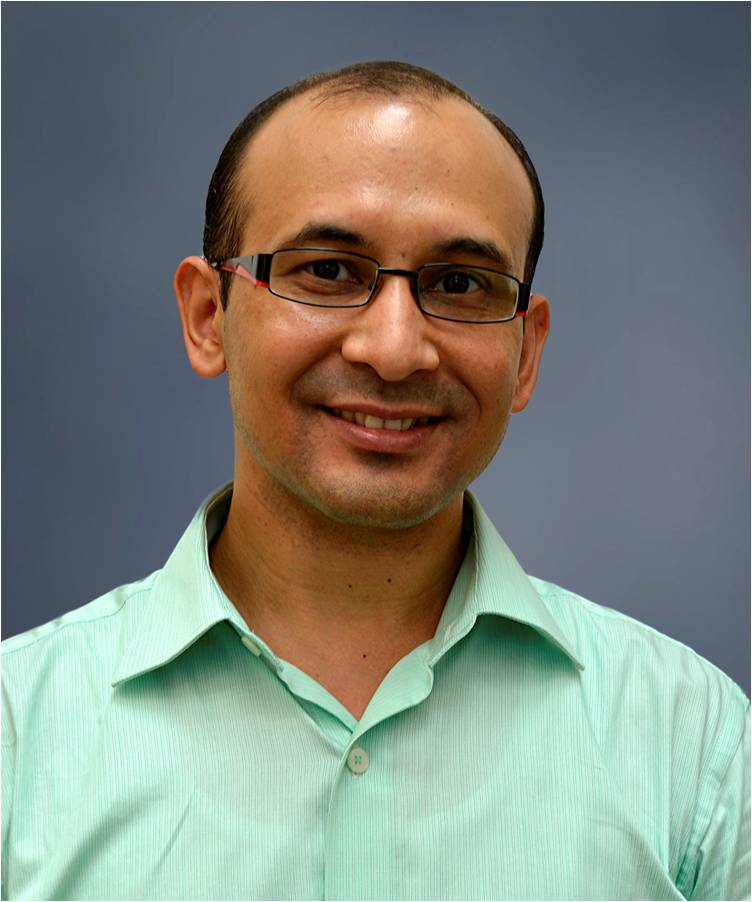
Professor
Ajay Singh Panwar
Email: panwar[at]iitb[dot]ac[dot]in
Phone: (+91) (022) 2576 7644
Education:
- Ph.D. Materials Science and Engineering, University of Minnesota, 2005 •
- B.Tech. Metallurgical Engineering and Materials Science, Indian Institute of Technology Bombay, 2000
In his teaching, Prof Panwar emphasizes concepts of interfacial phenomena, soft matter physics and diffusion in materials. Some courses taught are:
Undergraduate courses: Colloids and Interfacial Science, Kinetics of Processes
Postgraduate courses: Diffusion and Kinetics, Molecular Simulations of Materials
Prof Panwar’s research focusses on utilizing largescale molecular simulation methods to discover fundamental phenomena at the interface of biology and soft matter physics. He uses multiscale molecular simulation techniques and free energy calculation methods to understand how molecular interactions lead to diverse assemblies and phenomena in biology and materials science. In the area of biophysics, his research group explores selfassembly of peptides into amyloid fibrils in neurodegenerative diseases, nanoscale transport between the cell nucleus and cytoplasm and enzymatic processes. Based on the simulations, new pathways for amyloid formation were proposed, which have important implications on the understanding of neurodegenerative diseases. Such insight can accelerate development of novel inhibition and therapeutic strategies for neurodegenerative diseases. In the area of soft materials, his research activities include, examining the role of electrostatic effects in the selfassembly of hybrid nanomaterials and earlystage polymer dynamics in heterogeneous polymer crystallization.
- Molecular Simulations of Soft Materials
- Simulation of Biophysical Processes
- Polymer Physics
- Colloid Assembly
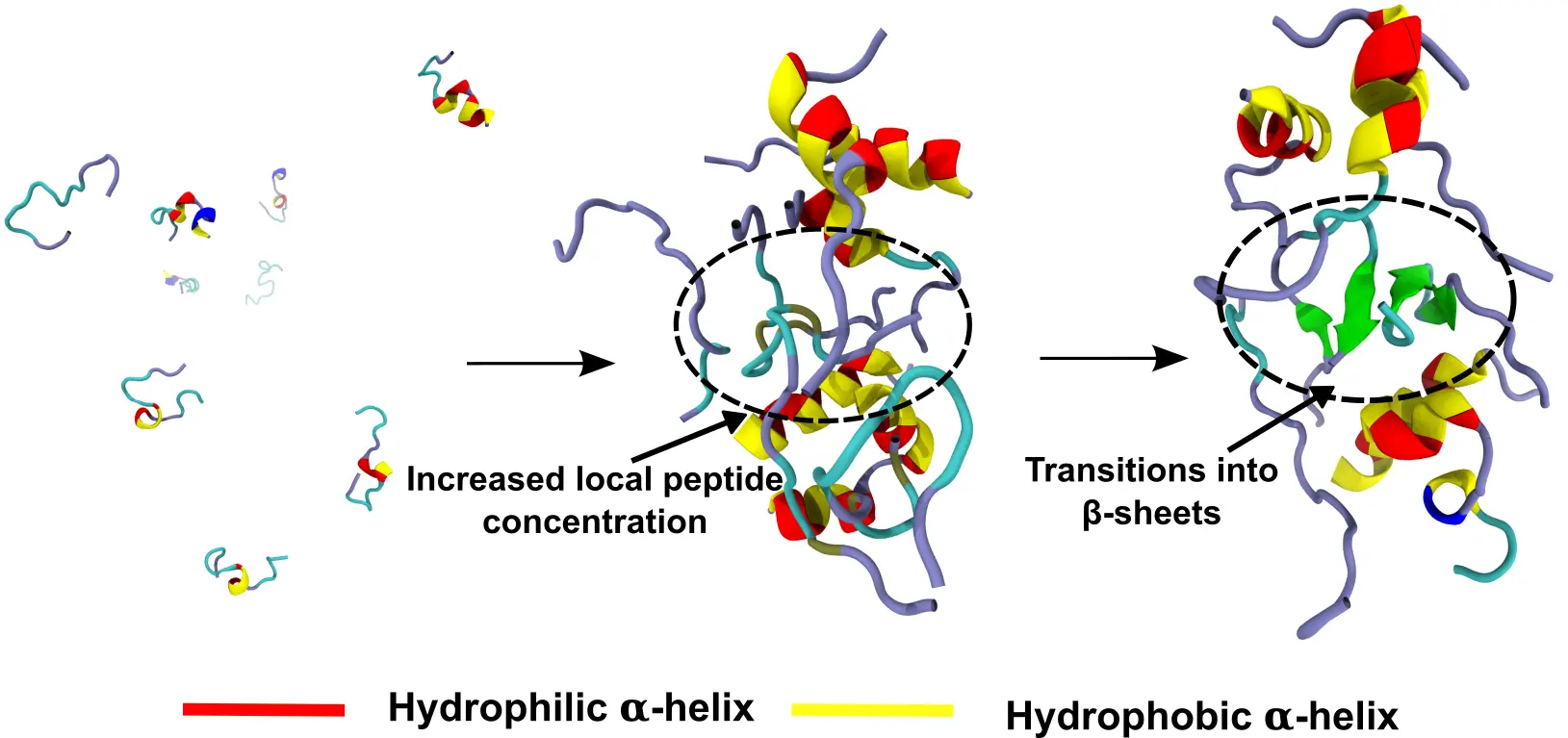
MD simulations show that helical intermediates are critical for formation of betasheets in amyloids [1]
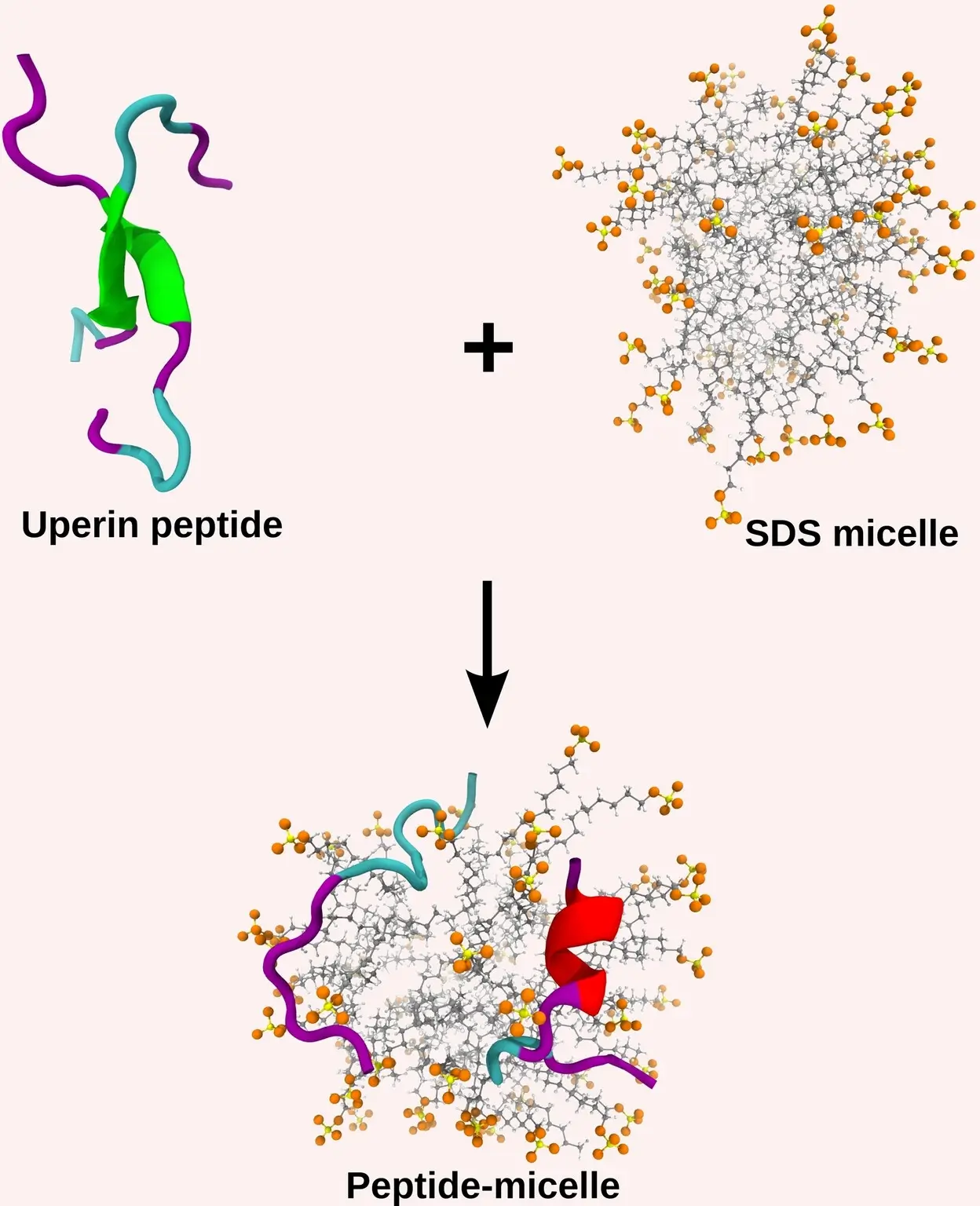
Disintegration of an amyloid dimer near an SDS micelle [2]
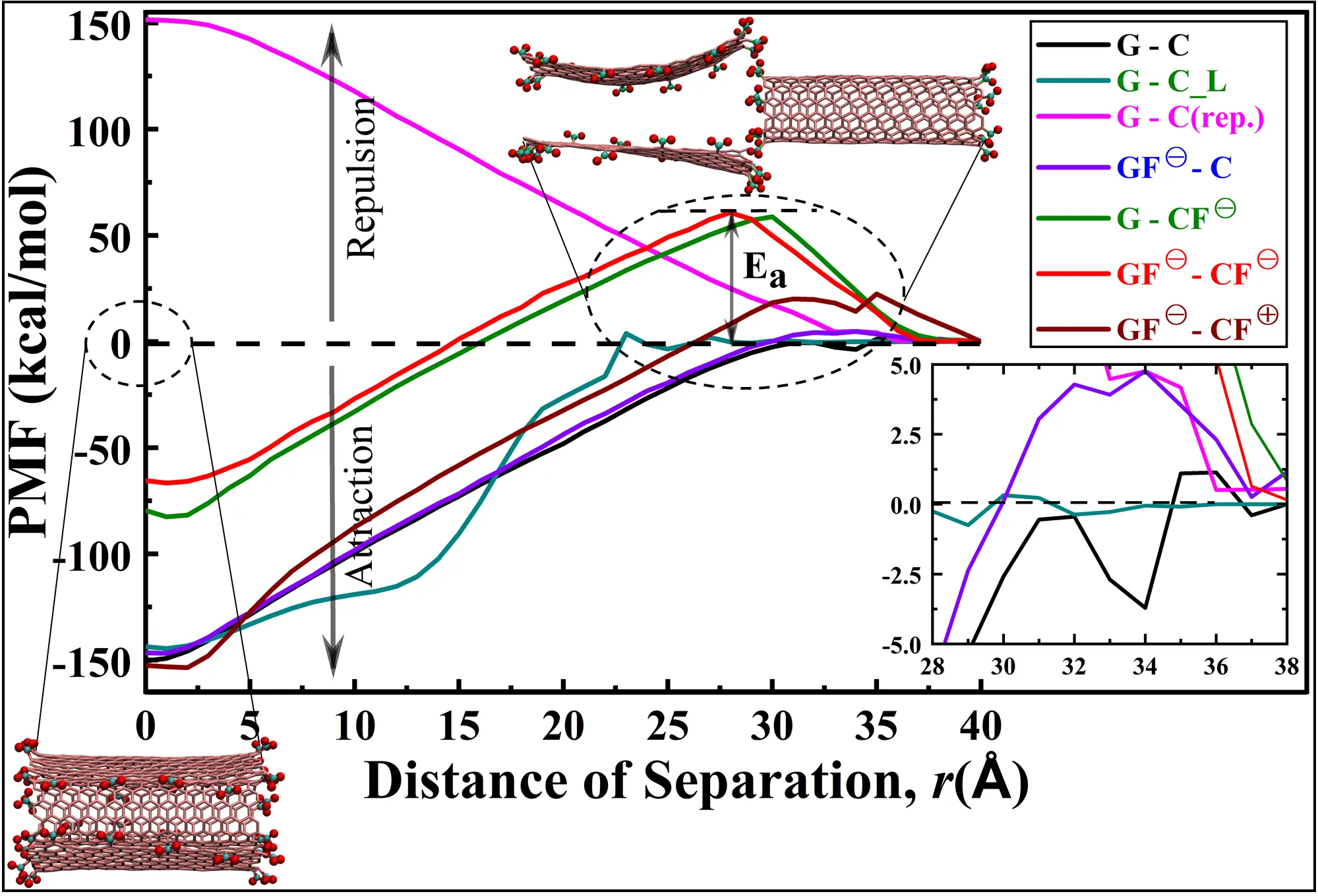
Tunable energy barrier for intercalation of a carbon nanotube into graphene nanosheets [3]
- A. K. Prasad, L. L. Martin, A. S. Panwar, “Helical intermediate formation and its role in amyloids of an amphibian antimicrobial peptide”, Physical Chemistry Chemical Physics 25, 12134 (2023) DOI:10.1039/D3CP00104K
- A. K. Prasad, C. Tiwari, S. Ray, S. Holden, D. A. Armstrong, K. J. Rosengren, A. Rodger, A. S. Panwar, L. L. Martin “Secondary Structure Transitions for a Family of Amyloidogenic, Antimicrobial Uperin 3 Peptides in Contact with Sodium Dodecyl Sulfate”, ChemPlusChem 87, e202100408 (2022) DOI:10.1002/cplu.202100408
- P. Rama, A. R. Bhattacharyya, R. Bandyopadhyaya, A. S. Panwar, “Tunable energy barrier for intercalation of a carbon nanotube into graphene nanosheets: A molecular dynamics study of a hybrid selfassembly”, Journal of Physical Chemistry C 123, 1974 (2019) DOI:10.1021/acs.jpcc.8b10958